
This coastline belongs to all of us. Not to Eskom
Not @ Thyspunt
Eskom wants to build a 5,200 MW nuclear power station between Oyster Bay and St Francis Bay — on one of South Africa’s most ecologically and culturally irreplaceable coastlines. We are fighting to stop it. With evidence. With the law. With you
Heritage - Grade I
A nomination to declare the Thyspunt area as a Grade 1 Cultural Landscape is under review by the South African Heritage Resources Agency. They have granted Provisional Protection to the Eskom site from Jan 2025 to Feb 2027, while they review the nomination.
5,200 MW
Proposed capacity. Estimated cost: R550 billion–R1,100 billion+ to South African taxpayers. First power: ~2040 at best.
11 years
We stopped them before. 2006–2017: the Thyspunt Alliance successfully prevented Eskom’s previous nuclear plan. We are doing it again.
~2040
First electricity, if built. By then, solar + wind + storage will deliver firm power at a fraction of the cost.
Heritage. Industries. One coastline. Everything to lose.
The proposed Thyspunt nuclear plant doesn’t just threaten the environment. It threatens the entire economic, social, and cultural fabric of the Kouga region.
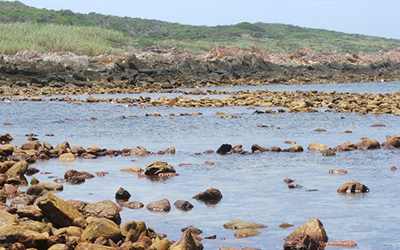
Our heritage
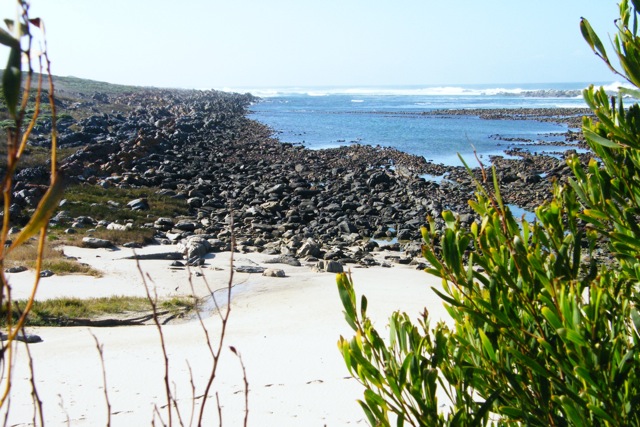
The Thyspunt coastline holds one of the most significant archaeological records on earth — nearly a million years of human occupation, and evidence of some of the earliest modern human settlements anywhere on the planet. Tools, ochre, shellfish middens. The physical record of how our species learned to think, plan and create.
Scientists recognise this stretch of the southern Cape coast as one of the places where modern humanity took shape. That's the science, not the sentiment. Once gone, this record cannot be recovered.
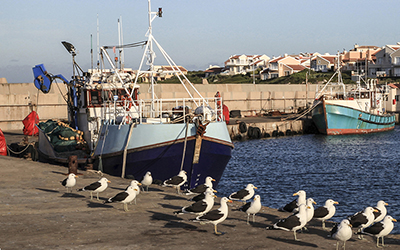
Fishing & marine life
The chokka squid fishery off Thyspunt is one of South Africa’s most significant inshore fisheries. The proposed cooling system draws up to 76,000 litres per second per reactor unit through critical spawning habitat. Eskom’s own marine report rates the impact as Very High before mitigation. The assessment has not been done at full 5,200 MW scale.
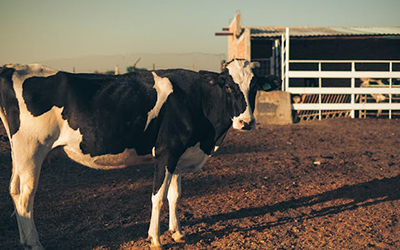
Agriculture
Dairy farmers and agricultural producers within 15km face groundwater disruption from 7.9 million cubic metres of excavation, water security risks, and reputational damage to produce from proximity to a nuclear facility. The Draft Scoping Report contains no agricultural impact assessment.
Tourism & property
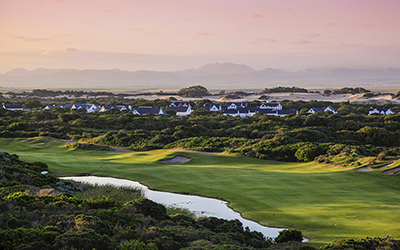
St Francis Bay, Cape St Francis, and Jeffreys Bay are world-class coastal destinations. Eskom’s own visual specialist rates the impact as HIGH — with no effective mitigation possible. Property inside the 16km emergency zone faces development restrictions, falling values, and nuclear-exclusion insurance clauses. Over 1,600 property owners are directly affected.
Safety & evacuation
One road. The R330. A two-lane bridge. In December and January, 30,000–50,000 people occupy this coastline. No evacuation time estimate has been produced. No nuclear emergency medical facilities exist in the Eastern Cape. The National Nuclear Regulator requires a tested evacuation plan. That plan does not exist.
The Draft Environmental Scoping Report — submitted by Eskom’s own consultants — contains findings that should stop this project in its tracks. We are ensuring that the findings are not disregarded.
VISUAL IMPACT — APPENDIX G15
“The visual impact of the proposed development is rated HIGH. No effective mitigations exist for a nuclear power facility of this scale in a coastal landscape.”
Eskom’s own visual specialist, DSR 2026
COASTAL SEDIMENT — APPENDIX G13
“The impact of [4.5 million cubic metres of offshore disposal] on longshore drift patterns and sediment supply to St Francis Bay beaches has not been quantified.”
Eskom’s oceanography specialist, DSR 2026
SURF BREAKS — APPENDIX G13
“Disposal of large quantities of material may have an irreversible impact on surf breaks in the long-term.”
Eskom’s marine specialist, DSR Oceanography Report, March 2026
SITE COMPARISON — G13 TABLE 5-14
“Bantamsklip: surf break impact rated Very Low — High confidence. Thyspunt: surf break impact rated Medium — Moderate confidence only. The site suitability table omits this differential entirely.”
Eskom’s own comparative assessment, DSR Appendix G13
We are in training. Not even at the start line.
The timelines presented in the Draft EIA process appear highly optimistic given the scale and complexity of the proposed Thyspunt Nuclear Power Station. The Environmental Impact Assessment will need to address thousands of pages of specialist studies, significant technical uncertainties, extensive public participation requirements, and the review of complex legal issues.
Experience from major infrastructure projects shows that delays, requests for additional information, appeals and legal challenges are common. For this reason, the Thyspunt Alliance timeline below may differ from the one proposed by WSP in their public documents.
Whatever the outcome, we must be prepared and ensure that the resources, expertise and funding required to participate effectively are available when they are needed.
YOU ARE HERE -2026
Scoping — submissions filed
The Draft Environmental Scoping Report was released for public comment in 1 April 2026. The Alliance and member organisations filed detailed formal objections by 29 May 2026
2026 – 2027
Final Scoping Report & legal review
The Thyspunt Alliance and all member organisations submitted detailed comments and objections. These substantive submissions were backed up by a community that actively participated in the process and filed 1000's of comments.
2027 – 2029
Environmental Impact Assessment phase
Full EIA with independent specialist studies. The largest public participation window of the entire process. Every study, every round, every appeal is a point of intervention.
2029+
Appeals, judicial review & beyond
Any environmental authorisation can be appealed under NEMA. If necessary, we will pursue judicial review. South Africa’s environmental law is robust and enforceable — but it requires resources.
South Africans have stopped irresponsible developments before.
In 1996, a coalition of over 150 organisations stopped Rio Tinto from strip-mining the coastal dunes at St Lucia — backed by half a million signatures and two future heads of government. Today that coastline is iSimangaliso Wetland Park.
In 2022, Wild Coast fishing communities took Shell to court under NEMA and had its exploration right set aside entirely. The judge found the consultation process ‘woefully lacking.’ The same law governs this EIA.
The Thyspunt Alliance stopped Eskom’s nuclear plans for this coast for eleven consecutive years, from 2006 to 2017. We have done this before. We know what it takes.
1989–1996 — CAMPAIGN FOR ST LUCIA
“Over 150 organisations stopped Rio Tinto from mining the world’s highest coastal dunes. Mandela’s government chose World Heritage protection over industry. Today: iSimangaliso.”
2006–2017 — THYSPUNT ALLIANCE
“Eleven years of formal engagement prevented Thyspunt from being selected. The legal and scientific record we crafted then is the foundation we build on now.”
2021–2022 — WILD COAST V SHELL
“Shell was interdicted and its exploration right set aside under NEMA. The judge: consultation was ‘woefully lacking.’ Same law. Same standard required here.”
This is not a wealthy residents’ campaign. This is everyone.
The Thyspunt Alliance is a broad coalition. Every sector that depends on this coastline has a voice in this fight.
First Nation
The KhoiSan of this area are the direct descendants of the earliest modern humans. Everywhere they have had their cultural landscapes carved up, sold off and often irreversibly degraded. We therefore believe that it is a duty to protect the Thyspunt Heritage Landscape
Fishing communities
Commercial and small-scale fishers whose livelihoods depend on the chokka squid grounds, rock lobster stocks, and inshore fishery offshore of Thyspunt.
Farmers
Dairy Farmers and agricultural landowners. with their water security, groundwater integrity, and produce reputation are all at stake.
Surfers & surf industry
The Seal Point Boardriders Club — est. 1993 — represents hundreds of surfers from youth development through to lifelong residents. Seal Point cannot be rebuilt.
Conservation & science
The Kromme Enviro-Trust
FOSTER (Friends of St Francis Nature Areas)
Rebelsrus Private Nature Reserve Landowner Association
Kromme Geelhout Conservancy
WESSA Eastern Cape
Property owners
Members1,600+ members of the ,SFPO NPC — the body that manages theprivately funded R142 million in coastal protection project. Their investment and their legal standing are both on the line.
The SFPO
Kromme Joint River Committee
Cape St Francis Civic Association
Oesterbaai Belastingbetalersvereniging
All communities
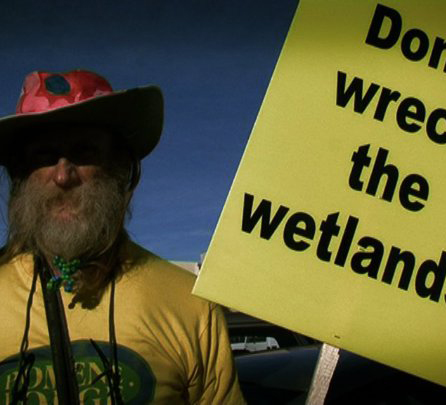
Residents of Oyster Bay, Umzamawhetu,Sea Vista, Humansdorp, St Francis Bay, Cape St Francis, and Jeffrey’s Bay. People who live here year-round and families who have been coming here for generations.
Part of our history as human beings
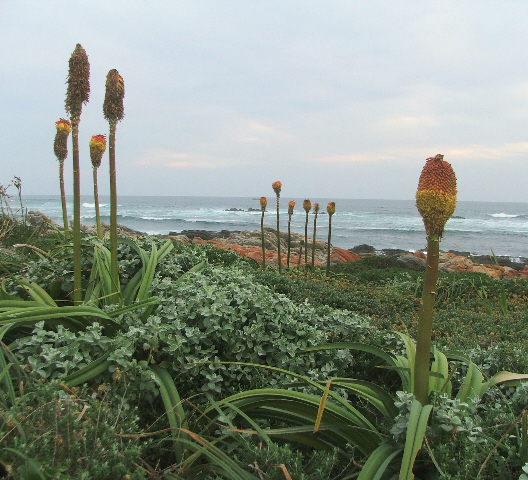
Whatever your connection to this particular piece of coastline — and for many people it runs deep — this landscape belongs to a story that is bigger than any of us. It is part of the shared record of where we all come from.
The Thyspunt coastline holds one of the most significant archaeological records on earth. Nearly a million years of human occupation. Evidence of the earliest modern human settlements. Tools, ochre, shellfish middens — the material record of how our species developed the capacity for abstract thought, planning, and culture. Scientists and archaeologists recognise this stretch of the southern Cape coast as one of the places where modern humanity took shape. That's not poetic licence. It's the science.
That record, once gone, cannot be recovered.
This fight is funded by people who love this place.
Legal teams. Scientific specialists. Formal submissions. Public participation. Appeals. Review applications to the court. Every step costs money to contest properly. The Thyspunt Alliance Fund (PBO 930088391) is a registered Public Benefit Organisation. Every rand is accounted for, audited, and deployed in the campaign.
A monthly pledge does more than a once-off donation. It gives us the certainty to retain specialists, respond to each EIA phase, and sustain this fight for as long as it takes.
Support the Thyspunt Alliance
Registered PBO · Audited · Every rand goes to the campaign
R250 / R500 / R1,000 monthly pledge · R5,000 once-off
Secure. | Tax-deductible. | PBO 930088391 | FNB Account 62364284093
Why people are fighting.
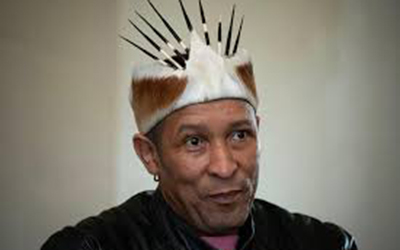
“Nothing about us without us..”
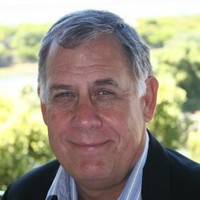
“We have committed R142 million to protect this beach. Eskom proposes to dump 4.5 million cubic metres of sand into the same coastal system without modelling the impact. That is not acceptable to us.”
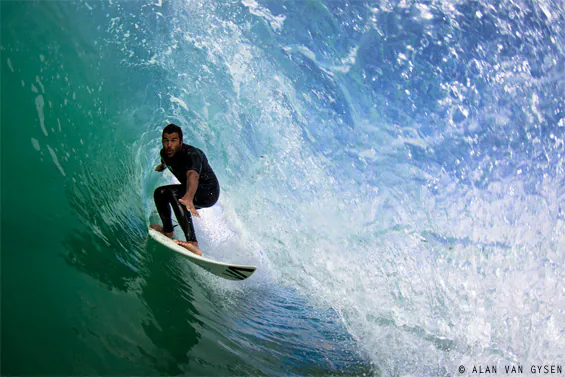
“The word irreversible doesn’t appear in their 2011 report. It appears in their 2026 report. That word belongs to Eskom. We are simply insisting it be taken seriously.”
“We have been working in this landscape since 1981. We know what is here. The EIA process doesn’t yet know what it would be destroying. That gap must be closed before any decision is made.”
Is the Alliance against nuclear energy in general?
No. The position is specific: this site, at this scale, is wrong for this coastline — environmentally, legally, economically, and culturally. Several member organisations explicitly state they are not opposed to nuclear energy in principle. We are opposed to 5,200 MW of nuclear capacity being built in a Grade I Cultural Landscape, on a globally unique dunefield, adjacent to critical marine spawning habitat, at an estimated cost of R550 billion–R1.1 trillion, for electricity that won’t arrive until 2040.
What does the SAHRA Grade I declaration mean?
In January 2025, the South African Heritage Resources Agency provisionally declared the entire Thyspunt site a Grade I Cultural Landscape — the highest level of heritage protection in South African law. The provisional protection is active until 1 February 2027. Any construction requires a Section 28 permit under the National Heritage Resources Act. The Draft Scoping Report does not adequately address what this means for the project.
Why does the Alliance need money?
The EIA process is structured — but contesting it properly requires specialist expertise at every stage. Environmental lawyers. Scientists. Marine biologists. Heritage experts. Without sustained funding, community objections remain statements. With funding, they become legally enforceable challenges. That is the difference the Thyspunt Alliance Fund makes.
Is South Africa still pursuing nuclear power legally?
The legal basis is contested. The ministerial determination authorising 2,500 MW of nuclear capacity was withdrawn in August 2024 after a legal challenge found the public participation process deficient. No valid replacement has been confirmed. The Kromme Enviro-Trust has formally requested confirmation of the legal basis on which this EIA is proceeding.
Why is Bantamsklip relevant?
Bantamsklip is the only alternative site under consideration. Eskom’s own specialist documentation rates it as Very Low impact on surf breaks versus Medium at Thyspunt — with High confidence versus Moderate. The DSR recommends dropping Bantamsklip from consideration before the full comparative EIA has been done. Multiple member organisations have formally objected to this as procedurally premature.